
Ask who will treat you
Check their treatment-specific training, experience, insurance and any professional registration relevant to the procedure.
Supportive facial care in Glasgow
This non-invasive LED appointment uses a timed visible-light programme as cosmetic support, with clear limits on what it can replace or promise.
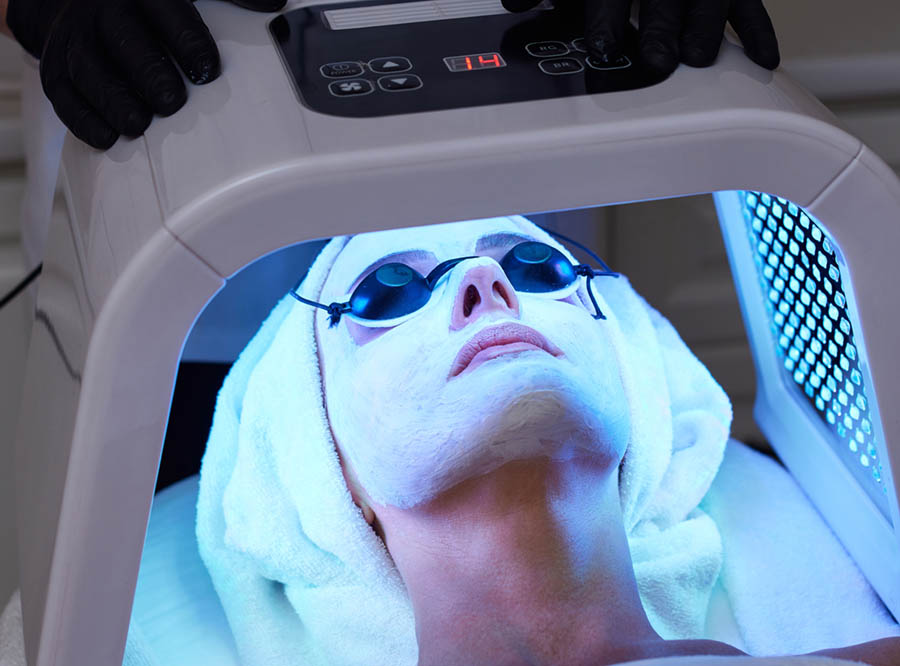
Cosmetic LED and acne-prone skin
For a suitable cosmetic appointment, the practitioner prepares the skin, supplies the eye protection required by the equipment and positions the LED array for a programmed exposure. The session does not abrade or extract spots.
Acne is a medical skin condition with evidence-based pharmacy and prescription treatments. NHS guidance recommends GP advice for moderate or severe acne, painful nodules, scarring risk or symptoms that have not improved with pharmacy treatment.
Ask the Glasgow team which route fits
Keep following advice from your pharmacist, GP or dermatologist. A cosmetic appointment should be postponed if the skin is infected, severely inflamed, broken or needs medical assessment.
A realistic supporting role
Some clients consider LED alongside a gentle skincare routine, but response varies and the useful number of sessions is uncertain. Photographs and a review point can help you decide whether continuing offers value.
Disclose prescription acne products, all other medicines and supplements, photosensitive conditions, eye problems and seizures triggered by light. If skin or general symptoms worsen, seek the relevant medical advice rather than adding more cosmetic sessions.
Book a Glasgow skin conversationUsing this Glasgow guide
This page separates the intended cosmetic use from likely limitations, material risks and reasons treatment may be unsuitable. Your health history, the exact product or device and the practitioner’s protocol can change the advice that applies.
Read NHS guidance on choosing a practitionerCheck their treatment-specific training, experience, insurance and any professional registration relevant to the procedure.
Understand common short-term effects, less common serious harms, aftercare and who will help if something goes wrong.
A price or appointment slot does not confirm suitability. You can ask for written information, pause or decide not to proceed.
Skin health before marketing
A consultation should identify when the responsible answer is pharmacy, GP or dermatology care.
Contact VIVO GlasgowNo. This is supportive cosmetic care and no clearance, cure or permanent control is promised. Acne may require evidence-based medicine from a pharmacy, GP or dermatologist.
NHS guidance recommends GP advice for moderate or severe acne, painful nodules or cysts, scarring or scarring risk, lack of improvement with pharmacy treatment, or significant effects on wellbeing.
Avoid picking or squeezing, which can worsen inflammation and scarring risk. Let the practitioner see the skin as it is and do not apply a new harsh treatment immediately beforehand.
Do not stop them without the prescriber's advice. Provide the exact names because some medicines can increase light sensitivity or mean the cosmetic session should be postponed.
Temporary dryness, redness, sensitivity, discomfort or headache may occur. The LED should be stopped if you develop marked heat, eye symptoms, dizziness or feel unwell.
Contact the clinic about an unexpected reaction and seek pharmacy or GP advice for worsening acne. Blistering, severe pain, facial swelling, visual symptoms or signs of serious allergy need prompt medical care.
Choose care that matches severity